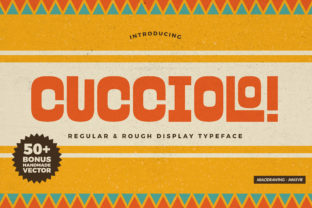
Cucciolo: A Playful and Cultural Display Font for Designers
Cucciolo is a unique display font that blends the vibrant energy of Mexican culture with a playful, artistic style. Designed to stand out, it offers a distinctive visual identity that can elevate any design project. Whether used in branding, packaging, or editorial work, Cucciolo brings a sense of warmth and creativity to typography.
What Is Cucciolo?
Cucciolo is a hand-drawn display font that draws inspiration from traditional Mexican art forms. Its design incorporates elements that reflect the rich cultural heritage of Mexico, including intricate patterns, bold strokes, and expressive letterforms. The font is ideal for projects that aim to convey a sense of authenticity, celebration, or artistic flair.
Unlike more formal typefaces, Cucciolo embraces a casual and whimsical aesthetic. It features irregular shapes, subtle variations in weight, and a dynamic flow that mimics natural handwriting. These characteristics make it particularly well-suited for creative and expressive applications.
Why Consider Cucciolo?
Designers and creatives may find Cucciolo appealing for several reasons. First, its cultural roots provide a unique narrative that can resonate with audiences looking for authenticity. This makes it a strong choice for brands aiming to connect with Mexican or Latinx communities, or for projects that celebrate cultural diversity.
Second, Cucciolo’s playful nature allows it to add personality to designs that might otherwise feel too rigid or conventional. It can be used to create eye-catching headlines, logos, or promotional materials that capture attention and evoke emotion.
Additionally, the font’s versatility enables it to work across various mediums. From print to digital, Cucciolo can maintain its visual impact while adapting to different contexts. Its legibility at larger sizes also makes it suitable for use in posters, banners, and other large-format designs.
Benefits of Using Cucciolo
One of the main advantages of Cucciolo is its ability to add character and originality to a design. In a world where many fonts are generic or overused, Cucciolo offers a fresh alternative that can help a project stand out. Its distinct style can make a brand or message more memorable and engaging.
The font’s cultural inspiration also provides a storytelling element. For designers working on projects with a thematic or historical angle, Cucciolo can serve as a visual representation of that narrative. This can enhance the overall cohesion and impact of the design.
Another benefit is its ease of use. Despite its artistic qualities, Cucciolo is typically available in multiple weights and styles, giving designers flexibility in how they apply it. It can be paired with other fonts to create balanced compositions, or used on its own for maximum visual effect.
Tradeoffs and Considerations
While Cucciolo has many strengths, it may not be the best choice for every project. One limitation is its readability at smaller sizes. Due to its hand-drawn style, it may become difficult to read when used in body text or in low-resolution environments. This means it is best suited for display purposes rather than long-form content.
Another consideration is its appropriateness for certain audiences. While the font’s cultural roots are a strength, they may also require careful handling. Designers should ensure that their use of Cucciolo respects the cultural context and avoids stereotypes or misrepresentation.
Additionally, because of its unique style, Cucciolo may not fit well with more minimalist or modern design aesthetics. It could clash with clean, geometric typefaces or overly structured layouts. Designers should evaluate whether the font aligns with the overall tone and goals of their project.
Situations Where Cucciolo Fits Well
Cucciolo is an excellent choice for projects that emphasize creativity, cultural expression, or emotional resonance. For example, it could be used in branding for a boutique, a festival promotion, or a cultural event. Its lively style can help convey a sense of fun, energy, and authenticity.
It is also suitable for editorial designs, such as magazine covers, book titles, or advertising campaigns. In these contexts, Cucciolo can add a visual punch that captures attention and reinforces the message being communicated.
For designers looking to experiment with typography, Cucciolo offers a chance to explore a more expressive and unconventional approach. It can be a valuable tool for those who want to push the boundaries of traditional design and create something truly distinctive.
Situations Where Alternatives May Be Better
In cases where clarity and simplicity are paramount, alternatives to Cucciolo may be more appropriate. For instance, if a project requires a professional or corporate look, a more neutral typeface might be a better fit. Fonts like Helvetica, Futura, or Lato offer a clean and versatile appearance that works across a wide range of applications.
Similarly, if the goal is to create a timeless or classic design, a more traditional font could be preferable. Cucciolo’s contemporary and playful style may not align with the desired mood or audience expectations in such scenarios.
Designers should also consider the target audience when choosing a font. If the intended users are not familiar with Mexican culture, or if the design needs to appeal to a broader demographic, a more universally recognizable typeface might be more effective.
Decision-Making Insights
When evaluating whether to use Cucciolo, designers should ask themselves a few key questions. Does the font align with the project’s visual identity and messaging? Will it enhance or detract from the overall design? Is it appropriate for the intended audience and medium?
Testing the font in different contexts can also be helpful. Designers should experiment with various sizes, colors, and pairings to see how Cucciolo performs in real-world applications. This can reveal potential issues or opportunities that may not be apparent at first glance.
Finally, considering the availability of the font is important. Some display fonts may have limited licensing options or technical constraints that could affect their usability. Designers should verify that Cucciolo is accessible and compatible with their preferred design tools and platforms.
By carefully weighing the pros and cons, designers can determine whether Cucciolo is the right choice for their project. When used thoughtfully, it can bring a unique and compelling visual element to any design endeavor.